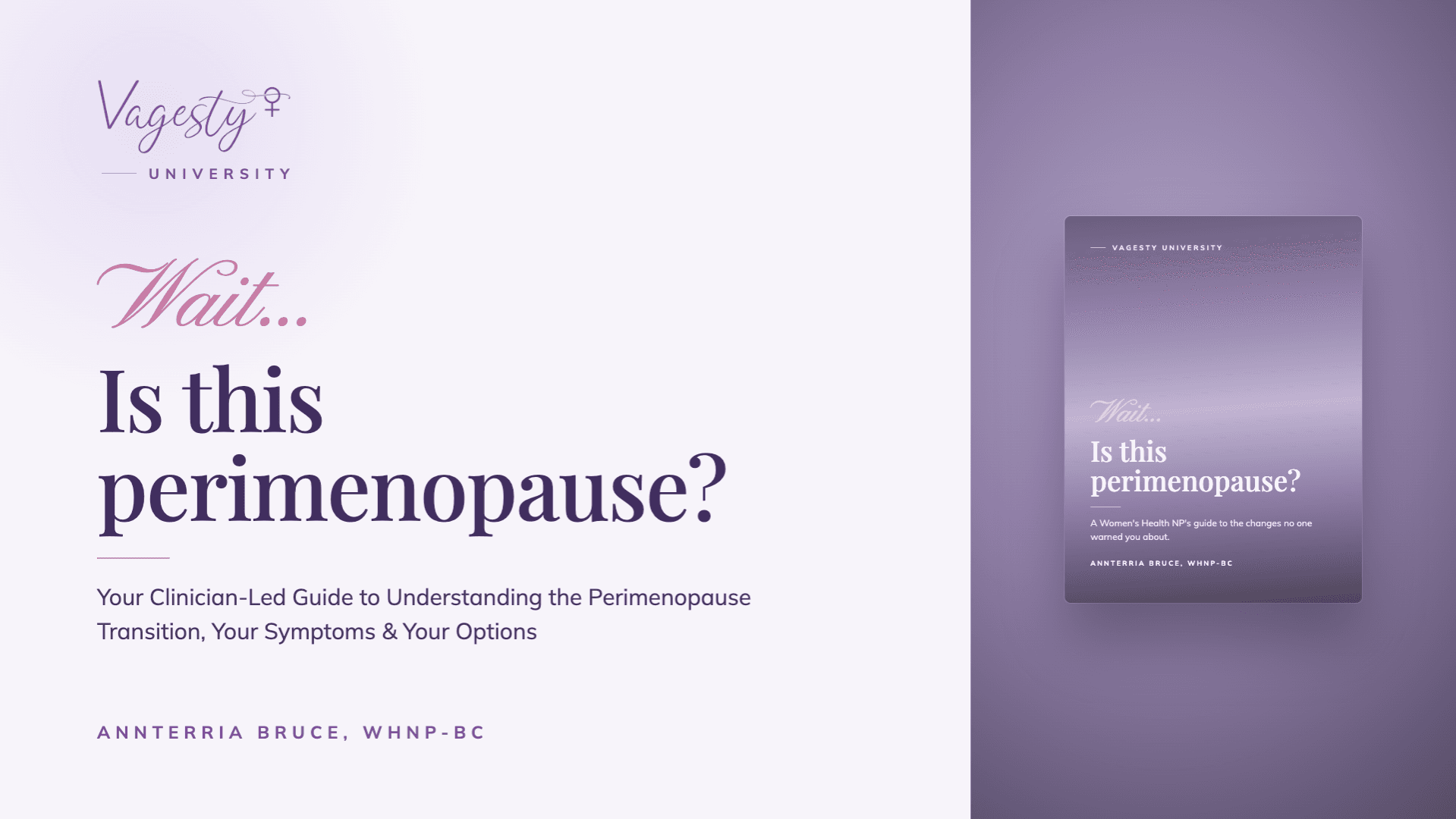
Wait....is this perimenopause?
$29.99
Wait… Is This Perimenopause?
Your Clinician-Led Guide to Understanding the Perimenopause Transition, Your Symptoms & Your Options
By Annterria Bruce, WHNP-BC
Your period is changing.
You're not sleeping like you used to.
Your mood feels different.
Maybe you're experiencing hot flashes, vaginal dryness, brain fog, heart palpitations, changes in your sex drive—or symptoms you never realized could be connected to hormones.
And now you're wondering:
“Wait… is this perimenopause?”
If that question sounds familiar, this guide was created for you.
Perimenopause Is More Than Hot Flashes
The transition into menopause can affect much more than your menstrual cycle.
As hormones begin to fluctuate, women may experience changes involving sleep, mood, cognition, sexual health, vaginal and urinary health, metabolism, cardiovascular health, bone health, and more.
Unfortunately, it's easy to experience these changes without realizing they may be connected.
Wait… Is This Perimenopause? was created to help you understand what's happening in your body and prepare you to have more informed conversations about your symptoms and treatment options.
Inside This Clinician-Led Guide, You'll Learn About:
• What perimenopause, menopause, and postmenopause actually mean
• How hormonal changes during midlife can affect different systems throughout your body
• Common—and often overlooked—perimenopause symptoms
• Changes involving your period and menstrual cycle
• Hot flashes and night sweats
• Changes in sleep, mood, memory, and concentration
• Vaginal dryness, urinary symptoms, and sexual health changes
• The importance of bone and cardiovascular health during midlife
• Evidence-based options used to manage perimenopause and menopause symptoms
• Hormonal and nonhormonal treatment considerations
• Questions and information you may want to discuss with your healthcare provider
Your Perimenopause Symptom Tracker
Sometimes the hardest part of a healthcare appointment is trying to remember everything you've been experiencing.
That's why you'll also receive a Perimenopause Symptom Tracker designed to help you document what you're noticing before your appointment.
Use it to identify symptoms, recognize changes over time, and organize the information you want to discuss with your healthcare provider.
Instead of walking into your appointment saying:
“I just don't feel like myself.”
You'll have a clearer picture of what has actually been changing.
This Guide May Be for You If...
You're in your late 30s, 40s, or 50s and have started noticing changes you can't quite explain.
Your periods are becoming different from what is normal for you.
Your sleep, mood, energy, memory, or concentration has changed.
You're experiencing hot flashes or night sweats.
You've noticed vaginal dryness, urinary changes, discomfort with sex, or changes in libido.
You've already spoken with a healthcare provider about perimenopause or menopause but left your appointment feeling like there was still a lot to unpack.
Or you simply want to understand the transition before you're in the middle of it.
Your 15-Minute Appointment Can't Cover Everything
Women's health visits are important—but there's a lot to discuss in a limited amount of time.
This guide isn't designed to replace that conversation.
It's designed to help you prepare for it.
You'll have foundational information you can review at your own pace, questions you can think about beforehand, and a symptom tracker you can bring with you.
Because the more you understand about what's happening in your body, the better prepared you can be to participate in decisions about your health.
Created by a Women's Health Nurse Practitioner
I'm Annterria Bruce, WHNP-BC, a board-certified Women's Health Nurse Practitioner and founder of Vagesty®.
I created this guide because women deserve more than being told to simply “deal with” changes that can significantly affect their quality of life.
My goal is to help you better understand this transition, learn about evidence-based options, and feel more prepared to advocate for the care and quality of life you deserve.
Don't wait until menopause to start understanding perimenopause.
Start learning about your midlife transition today.
This eBook is for educational purposes only and is not intended to diagnose, treat, cure, or prevent any medical condition. It does not replace evaluation, diagnosis, treatment, or individualized medical advice from your healthcare provider.