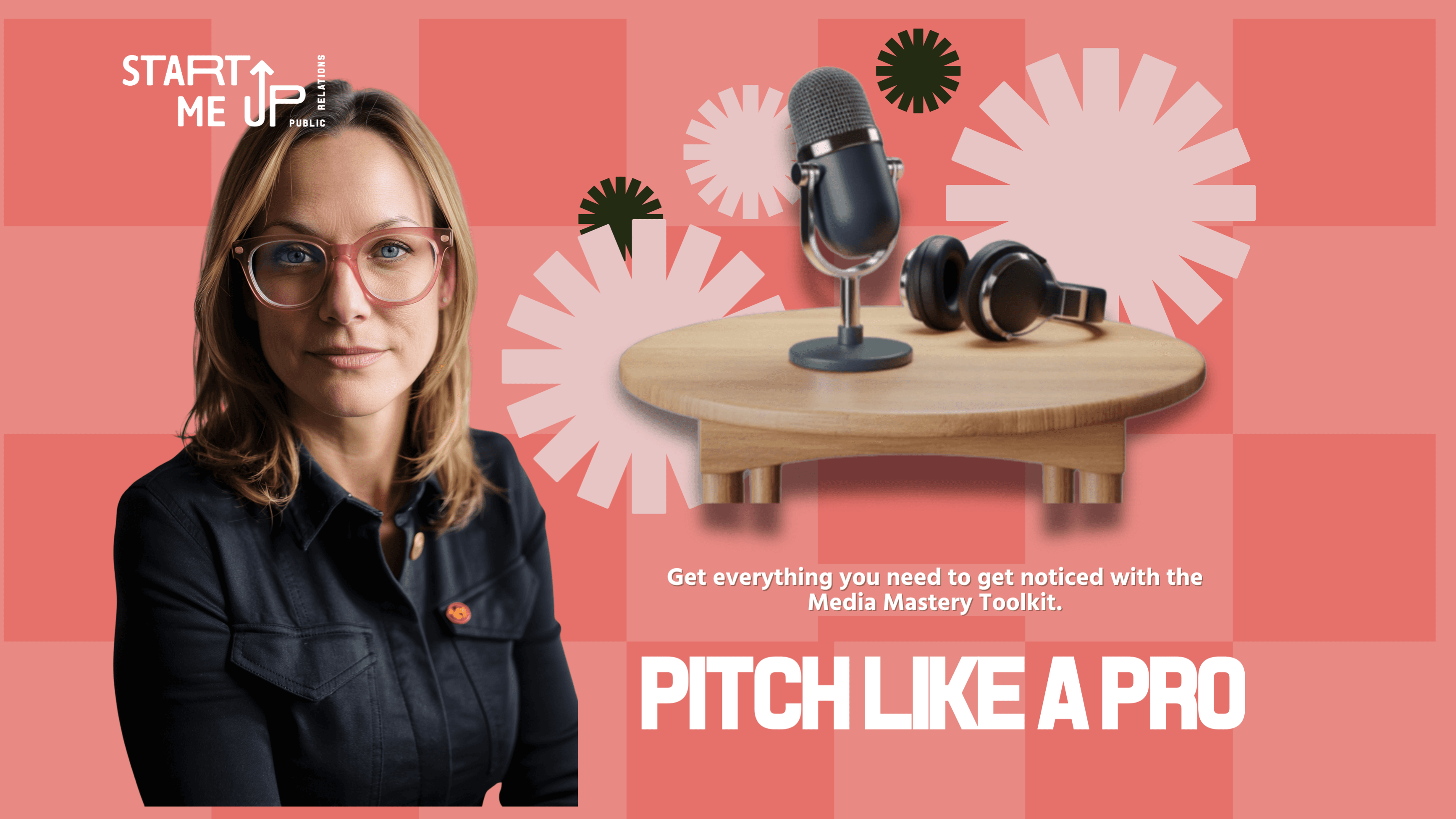
Media Release 101 — Full Toolkit
CA$49.99CA$150

Yes, you do "do" Media Relations
A journalist-built media relations framework for comms consultants, freelancers, and fractional teams who want to offer PR — without partnering with a bigger agency.
Your clients already trust you with their brand.
Their social. Their messaging. Their launches.
Then they ask: "Can you help us get press?"
And you either say no — or you wing it.
You know the fundamentals. You understand positioning. You get storytelling.
But media relations has its own structure. Its own rules. Its own language.
And without a repeatable system, every media pitch feels like starting from scratch.
Media Release 101 gives you an editorial framework you can use across clients — so you can confidently add media relations to your offering without outsourcing it to someone else.
THE REAL PROBLEM
You want to offer the expertise and service when needed, without farming out.
You're lacking a media-specific structure.
Right now, when a client or your team asks for or needs Media PR support, you're probably:
→ Cobbling together media materials from templates that don't feel right
→ Referring the work to a larger agency (and losing the revenue)
→ Saying "that's not really what I do" — even though it could be
→ Second-guessing whether a pitch sounds like something a journalist would actually open
None of that means you can't do this work.
It means you haven't had the editorial lens to do it with confidence.
That's what this fixes.
WHY NOW
Why is earned media suddenly a priority again? Because LLMs and AI search tools build their answers from editorial sources — not blogs, not social, not ads. Media coverage now directly influences how AI recommends and describes businesses. If you're advising clients on comms and not accounting for this, you're leaving their biggest growth channel untouched.
I already do content and social. Isn't that enough? Owned content lives in your client's ecosystem. Paid stops when the budget stops. Earned media is the only channel that gets picked up by AI systems, builds independent authority, and compounds without ongoing spend. The consultant who delivers all three keeps the client.
My clients haven't asked about AI visibility yet. They will. The one who raises it first positions themselves as a strategic partner, not a reactive vendor. This is the same inflection point as social media a decade ago — early movers built the capability before demand hit and were the ones who scaled.
Will AI replace the need for media relations? The opposite. As AI-generated content saturates everything, editorial curation by real journalists becomes the credibility signal that both algorithms and people rely on. AI needs authoritative sources to function. Earned media is how brands become those sources.
Does this work for B2B clients? Arguably more than B2C. B2B buyers research extensively before decisions, and increasingly that research involves AI tools. Trade coverage and expert features directly influence the AI-assisted buying journey — and most B2B brands are dramatically underinvested in it.
WHAT YOU GET
Inside Media Release 101, you'll walk away with:
✔ A clear framework for identifying press-worthy angles — for any client, any industry
✔ Pitch email structures that match how journalists actually scan their inboxes
✔ A journalist-friendly media release format you can adapt across accounts
✔ A reusable media backgrounder template
✔ AI-assisted prompts to accelerate angle development and drafting
✔ Real examples showing what gets opened vs. what gets deleted
This isn't a PR course.
It's a working system you can deploy the same week you buy it. It gives marketing and storytelling consultants, fractional teams, students and even in house communications teams the bedrock to providing media coverage and outreach.
WHY THIS IS DIFFERENT
Most PR resources are built for founders doing it themselves.
This system is built from an editorial perspective — based on how newsrooms actually evaluate pitches.
That means:
→ Less fluff
→ Less corporate jargon
→ More structural clarity
→ More strategic positioning
You bring the client relationship and the brand knowledge.
This gives you the media relations framework to match.
WHO THIS IS FOR
This is built for:
— Freelance communications and content strategists
— Fractional CMOs and comms leads
— Social media managers expanding into earned media
— Small agency teams adding PR to their service offering
— Storytelling consultants who want a media outreach structure
You don't need newsroom experience.
You need a system built by someone who has it.
WHAT THIS MEANS FOR YOUR BUSINESS
When you can confidently handle media relations in-house:
→ You stop losing revenue to referral agencies
→ You deepen client relationships (one provider, not two)
→ You differentiate from every other freelancer offering "content + social"
→ You increase your per-client value without increasing your overhead
→ You own the full comms picture — not just half of it
This isn't about becoming a PR agency.
It's about having the capability when clients need it.
BUILT BY
Created by Start Me Up PR — journalists, communications leaders across corporate, startup, and creative sectors, and founder of Start Me Up PR and the Start Me Up PR team.
This system is based on how editors and producers actually make coverage decisions.
Not recycled blog advice. Not influencer PR tips.
Real editorial pattern recognition — packaged into a practical framework you can use with clients.
PRICING
CA$49.99
That's less than one billable hour for most consultants.
If it saves you even two hours of pitch development on a single client account, it's already paid for itself.
And you'll reuse it across every client who asks for media support.
No subscriptions. No logins. No course modules to sit through.
Instant access. Immediate use.
FAQ
Is this beginner-level content? No. The framework is built on editorial logic — useful whether you're adding PR to your services for the first time or tightening a process you already have. It's practical, not introductory.
Can I use this across multiple clients? Yes. The frameworks are designed to be adapted across industries, launch types, and announcement formats.
I already do some media work. Will this still help? If you're currently building pitch structure from scratch for every client, this will save you time and improve consistency. If you already have a repeatable editorial system, you may not need it.
Is this a substitute for a full PR strategy? No. It's a structural foundation. You can use it independently, layer it into existing client work, or build on it as your media offering grows.
What if I'm not sure media relations is something I want to offer? If clients are already asking you about press, the demand exists. This gives you a framework to say yes — confidently and professionally.
Stop referring out the media work.
Add media relations to your offering — with structure, not guesswork.
Get Media Release 101.
👇 Get Instant Access 👇